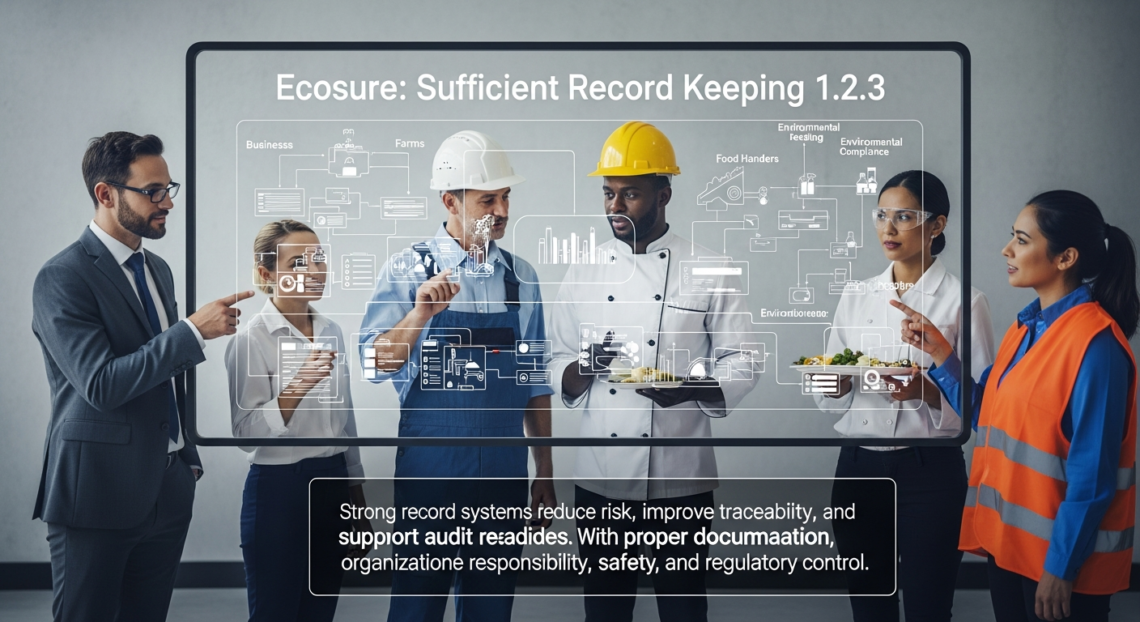
Ecosure sufficient record keeping 1.2.3 matters for businesses, farms, industries, food handlers, and environmental compliance teams. Strong record systems reduce risk, improve traceability, and support audit readiness. With proper documentation, organizations demonstrate responsibility, safety, and regulatory control. This guide explains requirements, structure, documentation formats, setup methods, and real-use strategies. Read step-by-step, implement easily, and build long-term compliance confidence.
What Is Ecosure Sufficient Record Keeping 1.2.3?
Ecosure sufficient record keeping 1.2.3 refers to maintaining accurate reports, logs, and documented information to satisfy Ecosure compliance standards. Through structured data entries, staff activities become traceable. Errors reduce and accountability strengthens. Records prove that procedures follow safety, hygiene, equipment checks, waste handling, and corrective actions. When managed properly, documentation supports transparency and enhances operational trust.
Why Ecosure Sufficient Record Keeping 1.2.3 Matters
Ecosure sufficient record keeping 1.2.3 improves internal controls. It verifies that every process happens correctly, consistently, and on time. Moreover, records act as proof when inspections occur. Workers track changes, identify risks early, and maintain readiness for assessments. Therefore, companies build sustainable growth and reputation. With verified documentation, dispute handling becomes easier, and data-driven decisions increase operational efficiency.
Core Components of Ecosure Sufficient Record Keeping 1.2.3
1. Daily Operational Record Logs
Daily logs capture actions such as cleaning tasks, waste disposal, equipment calibration, meeting notes, and verification checklists. Staff input timestamps and signatures. As information accumulates, trends appear fast. Teams then correct deviations instantly. Proper daily records show business consistency, helping auditors track workflows from start to finish.
2. Incident and Corrective Action Reports
When issues occur, detailed reports become essential. Incident logs include cause, response, responsible personnel, and prevention plans. With structured reporting, repeat failures reduce. Hence, operational safety increases. Managers review entries weekly or monthly and ensure timely improvement actions. Records should remain accessible for reference during compliance evaluations.
Training and Competency Records
Training documentation proves employee qualification. It includes training dates, course details, assessment results, and refresher requirements. New staff receive schedules and progress sheets. Supervisors then confirm readiness. Competency logs under Ecosure sufficient record keeping 1.2.3 assure that only trained staff perform regulated tasks and safety-critical operations.
How to Implement Ecosure Sufficient Record Keeping 1.2.3
Step 1 — Build a Standardized Record System
Start by defining document categories, forms, and approval workflows. Use printed templates or digital tools every day. Files get labeled, stored securely, and reviewed frequently. Centralized management prevents data loss. Version control keeps information current. Streamlined format increases accuracy, efficiency, and staff confidence.
Step 2 — Train Staff on Documentation Procedures
Staff must know entries required, timing for submission, and data standards. Clear instructions reduce mistakes. Supervisors conduct refresher training often and observe record trends. Through consistent reinforcement, compliance becomes natural. Standard operating procedures help new employees follow correct methods smoothly.
Step 3 — Maintain Data Integrity and Accessibility
Data must remain accurate, secure, and traceable. Storage should allow quick retrieval during audits. Records organized carefully reduce search time. Backups protect against digital loss. Authorization levels protect sensitive information. Because of this, risk lowers and operations remain uninterrupted.
Documentation Formats for Ecosure Sufficient Record Keeping 1.2.3
| Record Type | Recommended Format | Frequency |
| Cleaning & Waste Logs | Checklists + Sign Sheet | Daily |
| Training & Competency | Digital HR File + Certificates | Monthly/As Needed |
| Equipment Monitoring | Calibration Log + Maintenance Slip | Weekly |
| Incident Reports | Root-Cause Form + Action Record | When Required |
| Compliance Audit Trails | Report + Review Session Sheet | Quarterly |
These formats provide structured flow. Work processes align naturally, helping businesses review evidence whenever necessary.
Best Practices for Ecosure Sufficient Record Keeping 1.2.3
Use Clear Labeling and Version Control
Every document should show category, author, date, and approval. Clear labeling prevents confusion. Version tracking avoids outdated information. Moreover, employees retrieve needed files immediately. With streamlined structure, audits become smoother.
Conduct Regular Internal Record Audits
Internal review eliminates missing data. Supervisors evaluate accuracy, storage methods, and staff participation. When errors appear, corrective measures begin quickly. Regular audits improve quality and preparedness.
Utilize Digital Record Management Tools
Digital tools automate entry tracking, reminders, cloud storage, and user authorization. Document search becomes fast. Stored files remain protected from physical damage. Adoption increases productivity and reliability across departments.
Common Challenges in Ecosure Sufficient Record Keeping 1.2.3
Businesses often struggle with incomplete logging, untrained staff, lost documents, and time pressure. However, solutions exist. Automate reminders and monitoring. Provide refocused training. Centralize archives. Further, standardize naming conventions. With persistence and discipline, systems evolve into strong compliance frameworks.
Benefits of Strong Ecosure Sufficient Record Keeping 1.2.3
With effective record keeping, operations gain control, clarity, and traceability. Inspections become stress-free. Incident resolution improves. Customers and auditors trust results. Documentation gives history, trend insight, and proof of compliance. Long-term growth strengthens naturally as efficiency increases and risks drop remarkably.
Conclusion
Ecosure sufficient record keeping 1.2.3 supports reliability, safety, and success. With structured logs, trained staff, digital archives, and ongoing audits, organizations operate confidently. Start implementation today, standardize your documentation framework, and monitor performance regularly. Strengthen accountability, reduce risk, and build a dependable compliance environment.
FAQs
1. What is Ecosure sufficient record keeping 1.2.3?
It is a documentation standard ensuring compliance through reliable logs, traceable data, and operational proof.
2. Why is proper record keeping important?
It improves safety, ensures audit readiness, prevents data loss, and supports accountability across operations.
3. What records are required under Ecosure standards?
Daily logs, training records, equipment checks, audit reports, and incident documentation.
4. How long should documents be kept?
Retention depends on operational policies, but long-term accessibility strengthens tracking.
5. Can digital tools support compliance?
Yes, digital systems ensure faster access, secure storage, and automated tracking.