Software has quietly shifted from something you install to something you simply access. That shift is called SaaS, short for Software as a Service. It powers everything from your email to your business tools, and chances are, you’re already using it daily without thinking twice.
Let’s break it down in a way that actually makes sense.
What is SaaS?
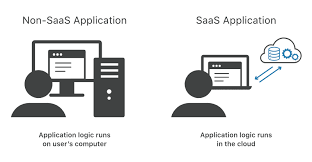
SaaS is a way of delivering software over the internet instead of installing it on your computer. You don’t download files, manage servers, or worry about updates. You just open a browser, log in, and start working.
Think of tools like Google Docs, Zoom, Shopify, or Netflix. You’re not buying the software outright. You’re subscribing to it and accessing it online.
What this really means is simple:
The software lives on someone else’s servers, and you access it whenever you need it.
How SaaS Works (Behind the Scenes)
Here’s what’s actually happening when you use a SaaS product:
1. Cloud Hosting
The software is hosted on remote servers, usually managed by cloud providers like AWS or Azure.
2. Web-Based Access
You access the application through a browser or app, without needing installation.
3. Centralized Updates
The provider updates the software regularly. You always use the latest version automatically.
4. Subscription Model
Instead of paying once, you pay monthly or yearly. This often includes support, maintenance, and new features.
5. Multi-Tenant Architecture
One system serves multiple users or businesses securely, reducing costs and improving scalability.
Why Businesses Prefer SaaS
The appeal isn’t just convenience. It’s efficiency, cost savings, and flexibility.
1. No Heavy Setup
No servers to install. No IT headaches. You can start using the software almost instantly.
2. Lower Costs
You don’t need large upfront investments. Subscription pricing makes budgeting easier.
3. Scalability
Whether you have 5 users or 5000, SaaS grows with your business.
4. Accessibility
You can work from anywhere. All you need is internet access.
5. Continuous Improvement
New features and security updates roll out automatically.
Key Components of a SaaS Ecosystem
A strong SaaS platform is not just about the core software. It often connects with other systems to create a seamless experience.
This is where integrations come in.
Payment Gateway API Integration
For SaaS businesses that charge users, payments need to be smooth and secure. This is handled through payment gateway API integration, which connects the software to payment processors.
It enables:
● Subscription billing
● Automated invoicing
● Secure transactions
● Multiple payment methods
Without this, managing recurring revenue becomes messy and manual.
Shipping API Integration
If the SaaS platform involves physical products or logistics, shipping API integration plays a crucial role.
It allows businesses to:
● Calculate shipping rates in real time
● Track deliveries
● Generate shipping labels
● Connect with courier services
For example, an e-commerce SaaS platform uses shipping APIs to automate order fulfillment without manual intervention.
Subscription Management Platform
At the core of most SaaS businesses is a subscription management platform. This is what keeps the revenue engine running.
It handles:
● User subscriptions
● Plan upgrades and downgrades
● Billing cycles
● Trial periods
● Payment failures and retries
In simple terms, it ensures customers stay subscribed and billing stays accurate.
Types of SaaS Applications
SaaS is not limited to one category. It spans across industries and use cases.
1. Business Tools
CRM systems, accounting software, HR platforms.
2. Marketing Software
Email marketing tools, social media schedulers, analytics platforms.
3. E-commerce Platforms
Online store builders with built-in payment gateway API integration and shipping API integration.
4. Collaboration Tools
Project management apps, communication platforms, document sharing tools.
5. Industry-Specific SaaS
Healthcare software, education platforms, real estate tools.
How SaaS Generates Revenue
Most SaaS companies follow a recurring revenue model.
1. Subscription Plans
Monthly or yearly pricing based on features or usage.
2. Freemium Model
Basic features are free, advanced features are paid.
3. Tiered Pricing
Different plans for different business sizes.
4. Usage-Based Pricing
You pay based on how much you use the service.
The subscription management platform ensures all of this runs smoothly.
Advantages of SaaS
Let’s get practical. Here’s why SaaS dominates today’s software world.
Speed
You can launch and scale quickly.
Flexibility
Users can switch plans, add features, or scale usage easily.
Security
Centralized systems allow better monitoring and updates.
Integration-Friendly
SaaS tools connect easily with other systems through APIs, including payment gateway API integration and shipping API integration.
Challenges of SaaS
It’s not perfect. There are trade-offs.
Dependence on Internet
No internet means no access.
Data Security Concerns
Sensitive data is stored on external servers.
Customization Limits
Compared to custom-built software, flexibility can be limited.
Recurring Costs
Over time, subscriptions can add up.
Future of SaaS
SaaS is evolving fast, and the next phase is even more interesting.
AI Integration
Smarter automation, predictive analytics, and personalized user experiences.
Vertical SaaS
More niche platforms tailored for specific industries.
API-Driven Ecosystems
Deeper integrations across tools using APIs, making platforms more connected than ever.
No-Code and Low-Code
Users building their own tools without writing code.
Final Thoughts
SaaS isn’t just a technology model. It’s a shift in how software is built, delivered, and used.
Instead of owning software, you access it. Instead of managing infrastructure, you focus on outcomes.
And the real power of SaaS shows up when everything connects seamlessly. Payment systems through payment gateway API integration. Logistics through shipping API integration. Revenue handled by a subscription management platform.
Put all of that together, and you get software that doesn’t just work. It runs your business.
That’s why SaaS isn’t the future anymore. It’s already the standard.