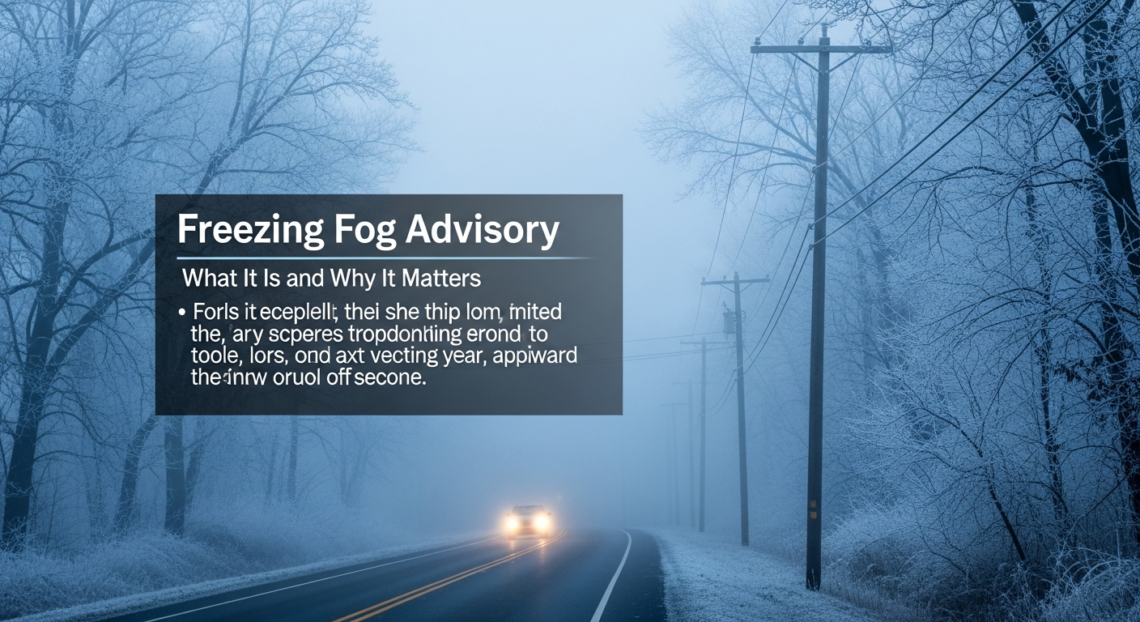
Have you ever driven in fog that felt icy and sticky? That’s when a Freezing Fog Advisory might be in effect. This weather warning alerts people about fog that freezes on surfaces like roads, trees, and vehicles. While fog is usually harmless, freezing fog can be dangerous. Understanding what a freezing fog advisory is can keep you safe and prepared.
A rare freezing fog advisory might not happen often in your area, but it’s important to know what it means. Local weather services issue these advisories to prevent accidents and help people plan ahead. Whether you’re commuting, walking, or just heading outdoors, knowing about dense fog that freezes can save lives.
What Is a Freezing Fog Advisory?
A freezing fog advisory is a weather alert from local meteorologists. It warns that fog is not only reducing visibility but also creating icy conditions. Roads, sidewalks, and vehicles can become slippery. This is especially important during early morning hours when temperatures are low.
Some people ask, “what is freezing fog advisory?” Simply put, it’s a heads-up from the weather service about potentially dangerous icy fog. The advisory helps drivers and pedestrians stay cautious and prevent accidents.
Freezing Fog Advisory Meaning Explained
The freezing fog advisory meaning is straightforward: cold temperatures plus fog equals ice on surfaces. Unlike regular fog, freezing fog can coat cars, roads, and power lines in a thin layer of ice. This can make driving hazardous and walking tricky.
By understanding the freezing fog advisory definition, you know it’s not just a fog warning—it’s a safety alert. It’s designed to prevent accidents, injuries, and property damage.
Dense Freezing Fog Advisory: A Serious Warning
Sometimes, forecasters issue a dense freezing fog advisory. This means visibility is extremely low and ice may form quickly. Dense freezing fog is more dangerous than light freezing fog because it reduces your ability to see while making surfaces slippery.
If your area has a dense advisory, slow down while driving and use fog lights. Even small precautions can prevent serious accidents.
Freezing Fog Advisory Areas: Where It Usually Happens
You might wonder, “where are freezing fog advisory areas?” These advisories often occur in regions with cold winters, like northern states or mountainous regions. Valleys are also prone to freezing fog because cold air settles there.
Checking local weather alerts can tell you if a freezing fog advisory near me is active. It’s always better to be safe and avoid unnecessary travel during these conditions.
What Does Freezing Fog Advisory Mean for Daily Life?
If you hear about a freezing fog advisory, what should you do? Basically, it means slow down and take precautions. Roads may be icy, and visibility low. Schools or workplaces may delay openings. Outdoor activities might be unsafe until the fog clears.
For many, a freezing fog advisory means checking weather apps, dressing warmly, and being patient while traveling. It’s a simple step that prevents accidents and keeps everyone safe.
Rare Freezing Fog Advisory: Why It Happens
A rare freezing fog advisory usually happens when conditions are unusual, like a sudden cold snap after a warm day. These rare events are not frequent but can be very hazardous because people are less prepared.
Meteorologists monitor temperature, humidity, and wind to predict when freezing fog might form. The advisory is issued to alert residents so they can plan accordingly.
Freezing Fog Advisory Definition: The Technical Side
From a technical perspective, the freezing fog advisory definition refers to a situation where water droplets in fog freeze upon contact with surfaces. This is different from snow or ice storms because the fog itself is the culprit.
Knowing the definition helps you understand why even a light-looking fog can be dangerous. It’s not just about visibility—it’s about slippery surfaces and safety risks.
How to Stay Safe During a Freezing Fog Advisory
Safety tips for a freezing fog advisory include:
- Drive slowly and keep headlights on low beam.
- Avoid sudden stops; maintain a safe distance.
- Walk carefully to prevent slips.
- Delay travel if possible during dense fog.
- Check local weather alerts regularly.
Even if the fog seems light, ice can form quickly, so these precautions are crucial.
Freezing Fog Advisory Near Me: How to Check
Want to know if a freezing fog advisory near me is active? Use:
- National Weather Service (NWS) alerts
- Weather apps with notifications
- Local TV or radio stations
Being aware in advance gives you time to plan, drive safely, or stay indoors.
FAQs About Freezing Fog Advisory
1. What is a freezing fog advisory?
It’s a weather alert warning of fog that can freeze on surfaces, making roads and sidewalks slippery.
2. How is it different from normal fog?
Normal fog reduces visibility, but freezing fog also creates ice, which increases danger.
3. What should I do during dense freezing fog?
Drive slowly, use low beam headlights, and avoid unnecessary travel.
4. Can freezing fog occur anywhere?
It’s more common in cold regions, valleys, and mountainous areas but can happen in unusual conditions elsewhere.
5. How rare is a freezing fog advisory?
A rare freezing fog advisory occurs when unusual cold and fog conditions coincide.
6. Where can I check for freezing fog advisories near me?
Use weather apps, local news, or the National Weather Service alerts.
Conclusion
A freezing fog advisory is more than just a fog warning—it’s a call to stay safe. Whether it’s a dense advisory, a rare event, or just a morning fog, knowing the meaning and precautions is key. Check local alerts, drive carefully, and stay aware. By understanding freezing fog, you protect yourself, your family, and your community.